
How Research Stopped Me From Making a Mistake
I almost booked a flight to China to visit the manufacturers and verify their eco certifications myself. That's how seriously I took this idea. Svale started as a real idea I genuinely believed in, and turned into a full business investigation: user interviews, supplier research, logistics conversations, financial modelling. And then a decision not to launch.
Svale
Svale
During my career break I started paying closer attention to what I was cooking with. The eco-kitchenware space was full of vague claims and greenwashing dressed up as values — but the real problem was simpler: switching from plastic and toxic kitchen tools to genuinely safe ones requires research most people don't have time for. Every product needs to be verified individually. Every claim needs to be checked.
I wanted to remove that entirely. Svale's core idea was curated bundles — pre-designed sets that let busy people switch their kitchen in one move, without having to research every item themselves. A constructor to build your own bundle if you wanted control. And an education layer to explain what "eco" and "non-toxic" actually mean — and what's just marketing.
I got obsessed. I researched suppliers across Europe and Asia, had real conversations with logistics people and small business owners in the Netherlands, mapped out the product range, and designed the brand. I conducted user interviews, did full competitive analysis across the eco-kitchen market, and worked out storage and fulfilment logistics. My husband ran the financial side in parallel — margins, customer acquisition costs.
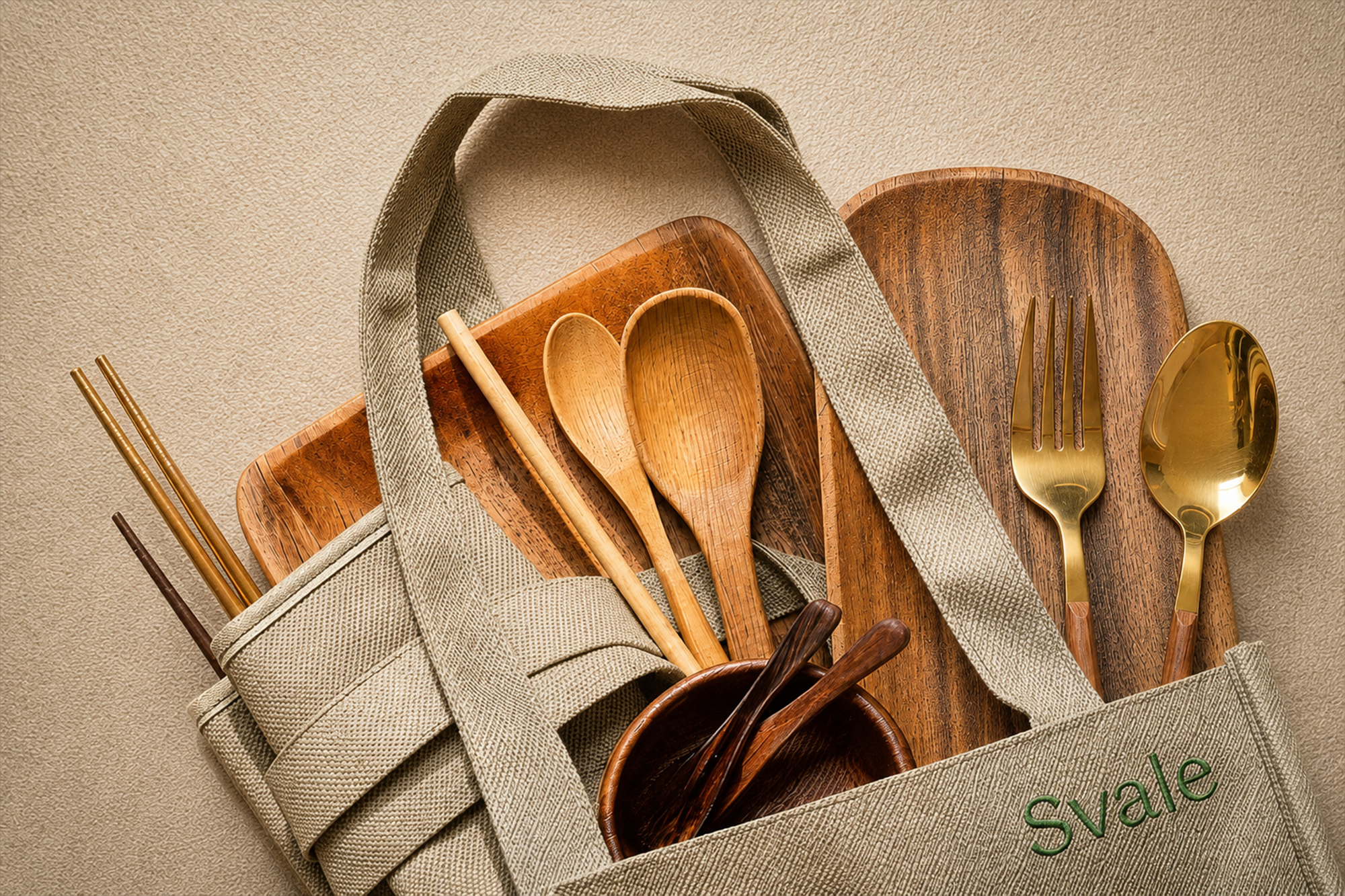

I named it Svale — swallow in Swedish. Swallows build nests from natural materials. Nordic design felt like the right reference: clean, considered, nothing unnecessary.
What the research showed
The user interviews, competitor analysis, supplier conversations, and logistics research all pointed the same way. People didn't want another niche shop — they wanted one place for everything, with the trust and convenience of a large retailer. The competitive landscape was built around scale we couldn't match. Suppliers who looked credible online got harder to verify the closer I looked. And every conversation with logistics people and small business owners in the Netherlands added the same thing: starting a physical product business here is expensive, margins are thin, and customer acquisition costs are brutal for small independent shops.
The research didn't kill the idea. It just made the decision obvious.
The decision
Research is only useful if you're willing to follow it somewhere uncomfortable. It's easy to use findings to confirm what you already want to do. It's harder to let them change the decision entirely.
We stopped. The idea was good. The market conditions weren't.